
The 28 Percent Reality: Inside Kakuma’s Ration Crisis as the Shirika Plan Confronts a Multi-Million-Dollar Aid Deficit
By The Editors
KAKUMA, KENYA — Under a mounting multi-million-dollar funding shortfall across East Africa, over 720,000 displaced residents across Kakuma, the Kalobeyei Integrated Settlement, and Dadaab are receiving just 28 percent of their standard monthly nutritional food basket, according to verified operational briefings from the World Food Programme (WFP). The dramatic retrenchment, which began taking hold across Turkana County this year, has coincided with the rollout of Kenya’s landmark Shirika Plan—a national framework designed to transition camps from humanitarian encampment into self-sustaining socioeconomic municipal hubs.
The Arithmetic of Survival: Inside the Food Distribution Centers
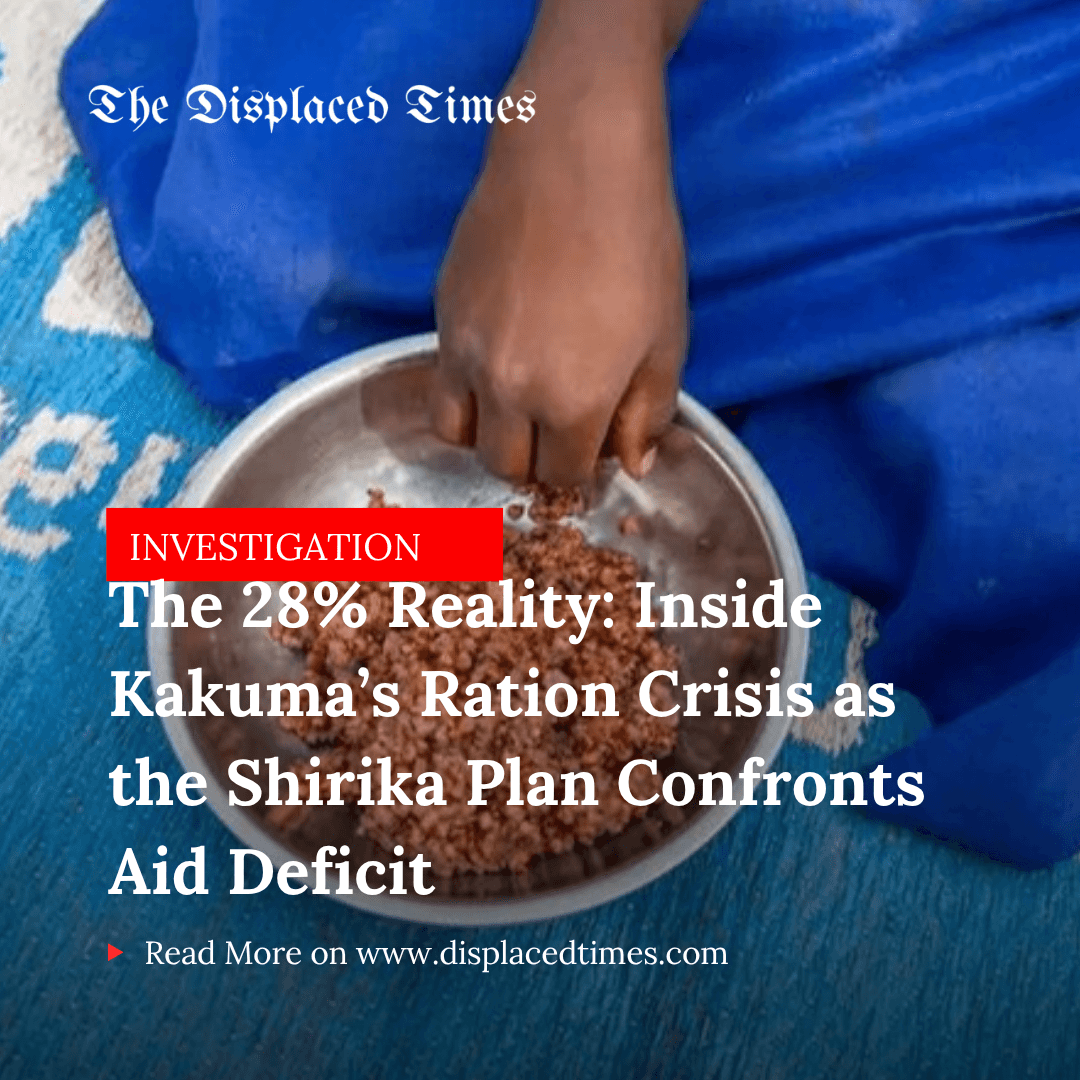
Outside Food Distribution Point 3 in Kakuma 1, the midday sun beats down on thousands of family ration cardholders waiting against the perimeter fences. What used to be a reliable monthly supply of maize, pulses, vegetable oil, and nutrient-enriched flour has dwindled to a fractional allocation that community elders estimate lasts fewer than eight to ten days.
According to the WFP Kenya Country Brief and regional hunger alerts, in-kind food rations were slashed to 28 percent after international donor contributions plummeted by more than 40 percent. Cash-based transfers, which previously enabled households to purchase fresh produce from local Turkana and refugee greengrocers, have been either completely halted or severely restricted to the most acutely vulnerable households.
"A ration of 28 percent is not assistance; it is an arithmetic threshold of slow starvation. Families are forced to make impossible choices between selling their last livestock or skipping meals for days at a time."
The Shirika Transition vs. Immediate Deprivation
The crisis exposes a profound timing mismatch in international refugee policy. In March 2025, the Government of Kenya and the United Nations High Commissioner for Refugees (UNHCR) formally inaugurated the Shirika Plan, an ambitious multi-year strategy under Kenya's Refugees Act to integrate refugees into the formal economy, granting access to national documentation, municipal services, and commercial enterprise rights.
While the Shirika Plan envisions refugees transitioning into tax-paying, self-reliant entrepreneurs by 2030, the abrupt withdrawal of emergency food aid is outracing the creation of formal economic opportunities. Without accelerated access to legal work permits, business licenses, and collateral-free capital, the gap between the end of humanitarian aid and the arrival of economic self-reliance threatens to destabilize local markets.
Informal Credit and Community Coping Networks
On the ground, grassroots refugee merchants are bearing the immediate brunt of the aid vacuum. In the bustling commercial centers of Kakuma 1 and Hong Kong market, small shopkeepers have become de facto community banks, extending informal credit to neighboring families to prevent hunger.
"Our ledgers are full of unpaid debt because you cannot refuse bread or flour to a neighbor whose children have not eaten in two days," explained a grain trader in Kakuma 2. "But our own wholesale suppliers in Kitale and Eldoret demand payment on delivery in Kenyan shillings. If this liquidity squeeze continues, small shops across the settlement will collapse."
The Path Forward: Accelerating Financial and Digital Rights
Community leaders, Refugee-Led Organizations (RLOs), and human rights advocates are calling on both the international donor community and Kenya's Department of Refugee Services (DRS) to take urgent coordinated action. Emergency funding must be mobilized immediately to prevent catastrophic malnutrition, while legal barriers to refugee banking, mobile money merchant accounts, and work authorization must be dismantled immediately under the Shirika framework.
Self-reliance cannot be built on an empty stomach. If the world expects displaced communities to build economic independence, it must provide the legal tools, financial infrastructure, and transitional safety nets necessary to make that promise a reality.